
North Carolina faces a significant affordable housing crisis. As of 2023, the state has a shortage of 207,837 affordable and available rental homes for extremely low-income (ELI) households. More than 70% of these renters, and nearly a quarter of middle-class renters are spending over half of their income on housing costs, according to the North Carolina Housing Coalition. Nearly a quarter of middle-class households face the same squeeze. Traditional site-built construction methods are increasingly inadequate to meet this demand.
BuildLabs, a tech-forward construction & architectural venture, believes the market is in dire need of sustainable, scalable housing solutions. “Setting higher standardized construction methods, supported by a trained workforce, provide a pathway to consistently exceed local building code requirements and establish a replicable model for high-quality, scalable housing solutions,” says Punit Chugh, founder of New York-based BuildLabs.
The design+build firm is investing in advanced engineering and a data-precise approach to construction management. Their goal is to deliver more innovative building methodologies that:
reduce construction timelines, and thus, labor costs
lower lifecycle costs related to electrical, heating, plumbing and winterization
yield less waste at every build phase
produce affordable living spaces that offer all residents a healthy lifestyle and "pride of place"
allow for flexible financing to satisfy budgeting needs
and deliver a transparent approach to building that satisfies all stakeholders.
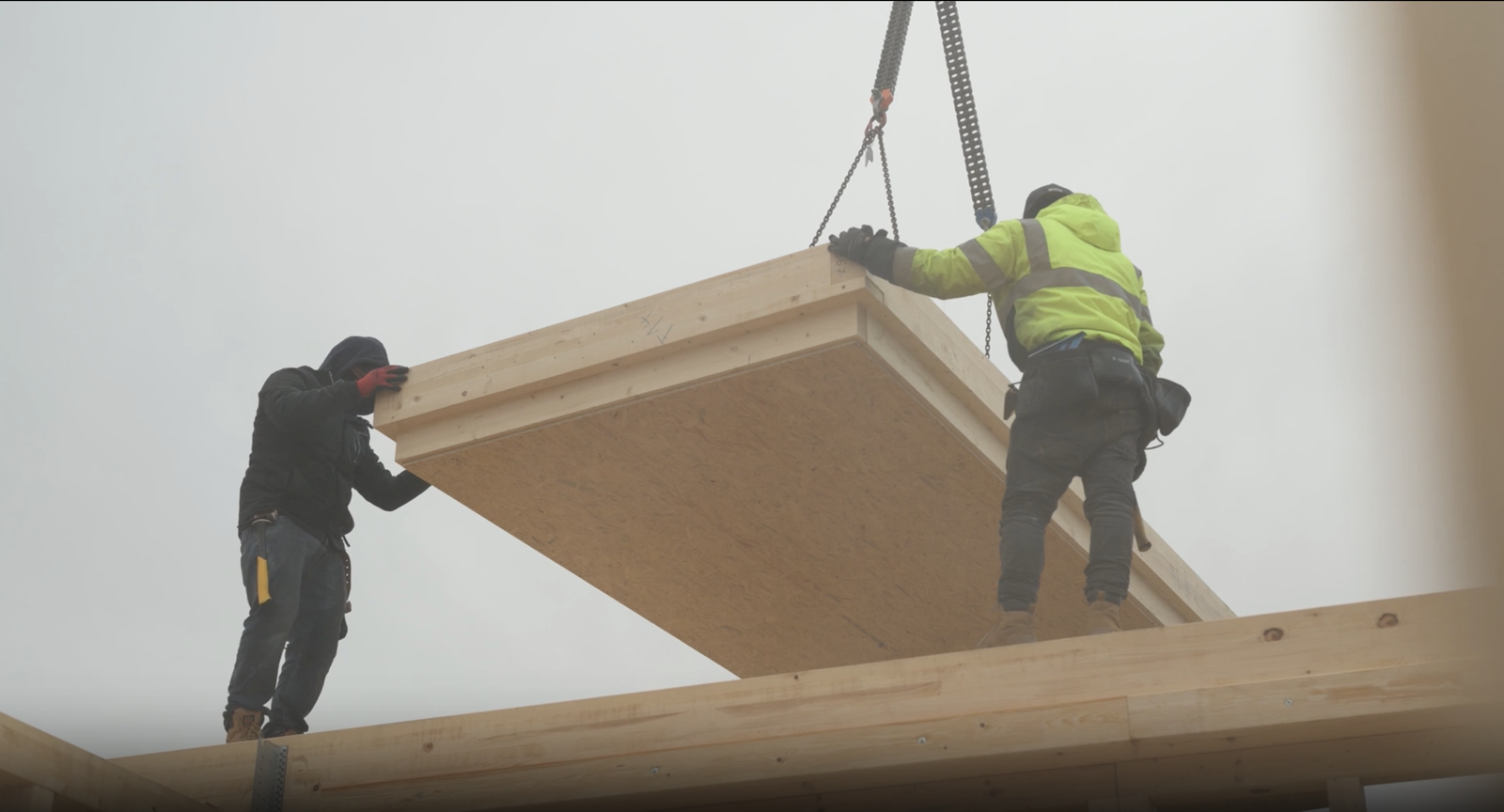
“The U.S. is short of about 5 million homes, yet we still build like it’s the 1950s,” adds Chugh. “My goal is to bring aerospace-level precision and automation into housing using the principles of Six Sigma management.” The company is building a manufacturing facility that leverages German engineering methodologies commonly used in European construction.
Behind every number is a household facing impossible decisions – groceries or rent, medicine or utilities, savings or survival. Neighborhoods decay when teachers, nurses, and first responders can’t live locally. Local economies strain. Communities shrink. The cost of inaction is far higher than the cost of innovation.
“Year after year, the data continues to show us the depth and breadth of the housing crisis,” said Stephanie Watkins-Cruz, Director of Housing Policy in a report. “This issue is not just a housing issue, it’s an everyone issue, and the growing need and levels of cost-burden continue to hurt the health, wealth, well being and success of our communities.”
The gap is only widening as demand grows and projects stall, slowed by outdated construction methods that take years to deliver what families needed yesterday.
“Affordable housing isn’t just about money–it’s about time, quality, and skilled labor,” states Chugh. “If we digitize and train right, we can build faster, more sustainable, and set a new benchmark for how affordable housing units are built in this country.”
North Carolina’s housing crisis is not only a problem of funding or policy, but of process. Without innovation in how we build, affordable housing will remain out of reach. BuildLabs is not proposing a tweak or marginal improvement. We’re advocating for a foundational shift in how we build. With smarter design, factory-driven precision, and aligned partnerships, BuildLabs offers a practical path forward for North Carolina communities in urgent need of solutions: affordable housing that lasts scaled across every corner of North Carolina.
Continue Reading: Building Affordable Housing Smarter: North Carolina’s Housing Crisis & Sustainable Nationwide Solutions




Write a comment ...